
Si-Tec® / ceramic-composite wear technology
Put the hardest material where the wear is happening.
Si-Tec® casts ceramic reinforcement into selected zones of an abrasion-resistant steel or iron casting, so the hardest material sits on the wear face instead of throughout a part that does not need it.
Patented technology, engineered and poured in Spokane, Washington.
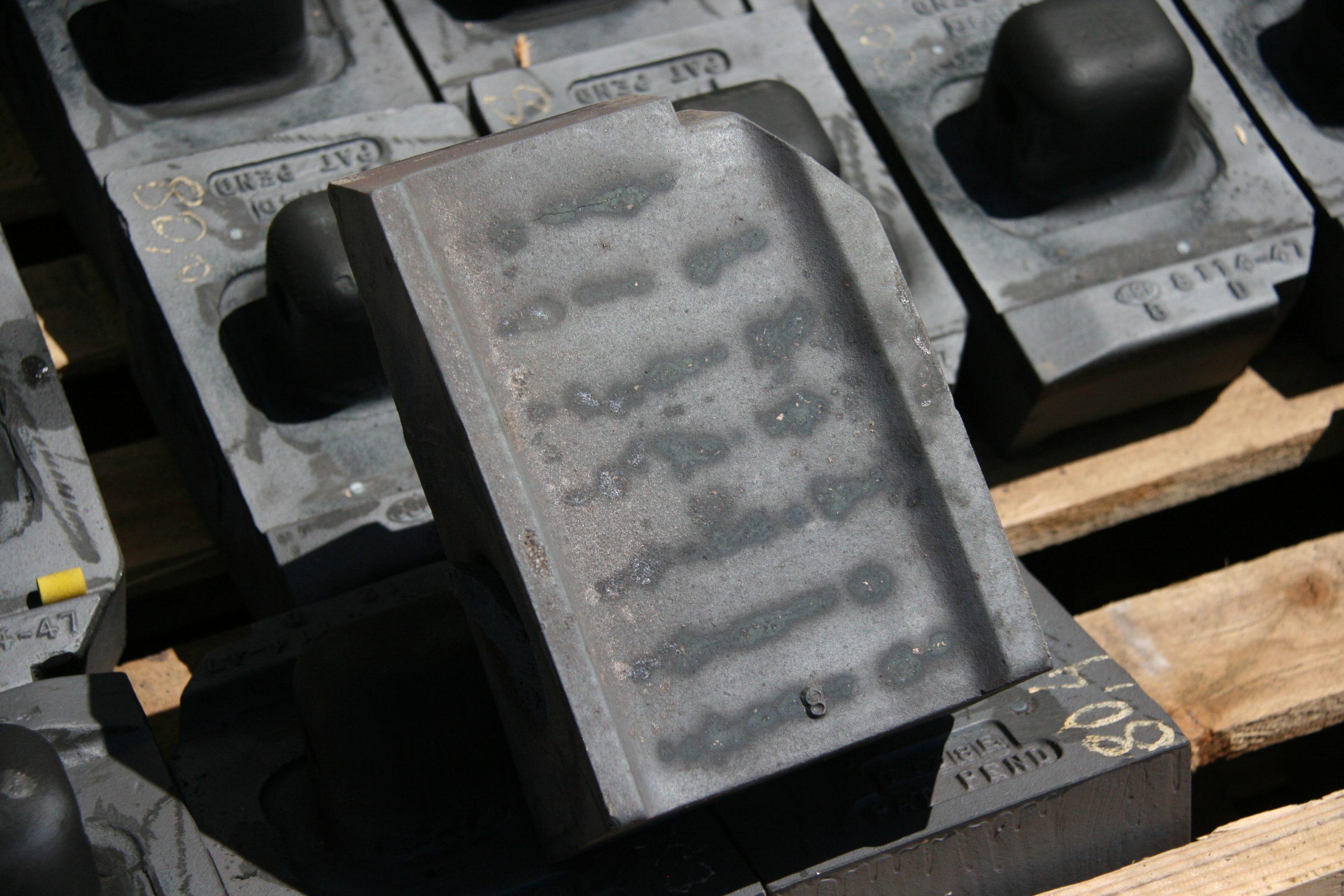
Material system
The material system is built around the application, the geometry, and the wear pattern the part actually shows. Not a grade off a list: it is laid out for the surface that is disappearing.
Construction
One casting, two materials, one wear face.
A coating sits on top of a part and can be lost. Si-Tec® reinforcement is cast into the part, so it stays in the zone it was placed in for as long as there is material left to wear.
01
Primary wear face
The surface the material runs across. This is the face that decides how long the part stays in service, and it is the face the reinforcement is placed behind.
02
Ceramic reinforcement
Ceramic is cast into the zones carrying the abrasion. It resists sliding wear that polishes a monolithic alloy away, and it stays where it was placed rather than sitting on top like a coating.
03
Metallic casting
An abrasion-resistant steel or iron casting carries the load, the mounting, and the geometry. The part remains a casting: reinforcement changes the wear face, not how the part mounts to the machine.
Reinforced zones are not weld repaired, and iron castings are not weld repaired at all — a Si-Tec® part is planned as replaceable
Application fit
It is the right answer for some parts and the wrong one for others.
Si-Tec® is laid out against a wear pattern, so the hardest material sits where the surface is disappearing. On the parts it suits, that means a longer run and a plant that keeps producing between change-outs. On the parts it does not, we will say so.
Where Si-Tec® earns its place
- Sliding abrasion is the dominant wear mode and a hard monolithic alloy is still polishing away
- The wear is concentrated in a predictable zone rather than spread evenly over the part
- A change-out stops production, so how long the part stays in service sets the maintenance schedule
- A harder single alloy would solve the abrasion but crack under the impact the part also sees
Where it does not
- Wear is light and evenly distributed — a standard alloy casting already gives you the service life you need
- The real failure is structural cracking, not wear. Geometry or grade comes first
- The part is bought as a consumable and changed on a fixed schedule — longer service life is not what the operation is after
- The part is kept in service by weld repair — reinforced zones and iron castings are not repaired that way
Applications
Proven across heavy industry.
01
Chute and hopper liners
Transfer points where material slides across the surface continuously at low impact. Sliding abrasion is the whole problem here, which is the condition Si-Tec® is built for.
Sustained sliding abrasion, low impact
02
Crusher wear components
Gouging and impact together, where a part hard enough to resist the abrasion is usually too brittle to survive the blows. Reinforcing the wear zone keeps the rest of the casting tough.
Gouging abrasion with impact loading
03
Wear plate
Sacrificial surfaces on high-traffic zones, reinforced in the areas that go first so the whole plate is not replaced on account of one worn corner.
Sliding and gouging abrasion, replaceable zones
Reinforcement is placed per part — a Si-Tec® version of your casting starts from your geometry, not from a catalog number
Specification
The wear pattern is the specification.
A print shows the part when it was new. The wear pattern shows what the machine is actually doing to it, which is the information the zone map is built from.
Send the service data01
Wear survey
Start from the service data. Measurements, photographs of the wear pattern, and how long the part lasted show what the application is doing to it.
02
Zone map
The wear pattern defines where reinforcement goes and where it would do nothing. It is placed only against the surface that is disappearing, so the part carries no material it will never use.
03
Material system
Matrix alloy and reinforcement are configured to the application and the geometry, and the part is checked against the mounting and the machine it returns to.
04
Pattern and pour
The part is cast on the same floor as everything else we make, under the same heat number and the same records.
05
Field measurement
Send back wear measurements when the part comes out. That drives the next revision of the zone map or the material, which is how a Si-Tec® part improves on a second and third run.
Field evidence
Numbers, but only with the machine attached.
Wear-life claims travel badly. A liner that lasts four times as long in one plant does nothing of the kind in another: different rock, different tonnage, different geometry. So no multiplier here. Nine measured trials sit on the success stories page, each with its machine, feed, and baseline. Read them as evidence, not as a number you can hold us to.
Read the nine field trialsWhat to send with the enquiry
- Service life of the part you are running now, in hours or tons
- Measurements and photographs of the part you are running now
- Photographs showing where the wear actually is
- Feed material, tonnage, and anything unusual about the duty
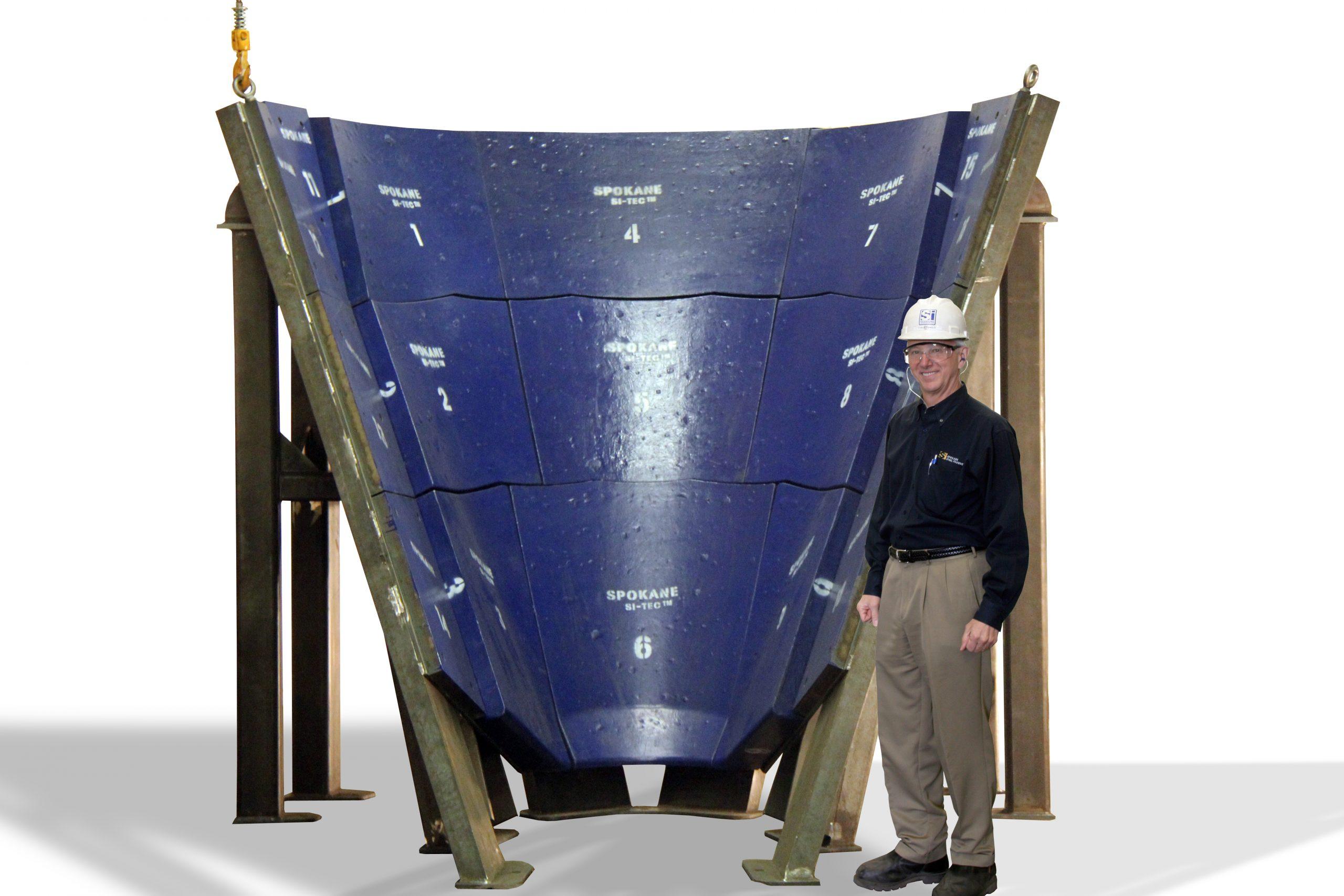
Manufacturing and records
Same floor, same heat number, same file.
Si-Tec® parts run through the same melt, mold, heat treat, and inspection sequence as every other casting here. Chemistry is read before tap, UT · MT testing is done in-house, and the results stay attached to the heat number.
Tell us which surface is disappearing.
Bring the part, the service life you are getting now, and the duty it runs in. Engineering will say whether Si-Tec® is the right answer for it — including when it is not.
Technical review within 48 hours