
Spokane, Washington / steel + iron casting
Built for the work that wears everything else down.
Spokane Industries manufactures abrasion-resistant steel and iron castings for demanding industrial applications.
Patented Si-Tec® ceramic-composite technology. Engineered and poured in Spokane, Washington.
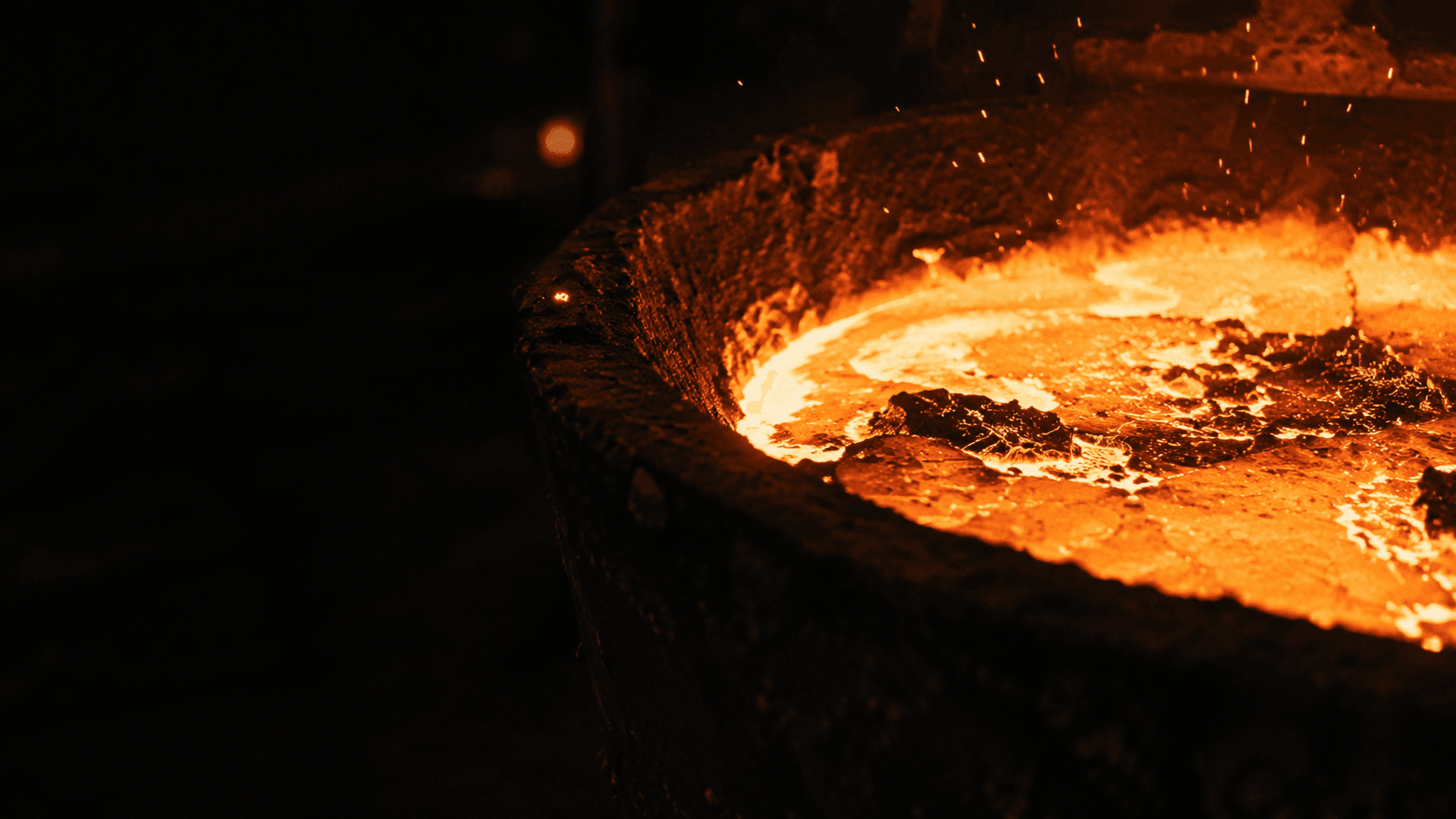
- Melt to finish
- One facility
- In-house NDT
- UT · MT
- Quote turnaround
- 48 hours
- Manufacturing
- Domestic
The Heat Path
Eight stages between a drawing and a part that survives.
Every casting we ship moves through the same controlled sequence. Chemistry, temperature, and dimension are recorded at each stage and stay attached to the heat number for the life of the part.
Stage 01 / active
Charge
Scrap and alloy additions are weighed to a calculated charge for the grade being poured. Every heat starts as a documented recipe.
Stage 02
Melt
The charge is brought to tap temperature and the chemistry is read on the spectrometer. Nothing leaves the furnace until it is inside the grade window.
Stage 03
Mold
Sand molds are built from patterns and cores held to the drawing, on the floor while the heat is still melting. Gating and risering are engineered so the casting feeds and solidifies in the right order.
Stage 04
Pour
Metal transfers to the ladle and into the mold at a controlled rate and temperature. Pour discipline decides whether the casting fills cleanly.
Stage 05
Finish
Shakeout, gate and riser removal, and grinding bring the casting down to the part before it goes to heat treat.
Stage 06
Treat
Heat treatment sets the microstructure — normalize, quench, and temper to the mechanical properties the specification calls for.
Stage 07
Verify
Dimensional inspection, hardness, and non-destructive testing confirm the part. Chemistry and mechanical results stay tied to the heat number.
Stage 08
Perform
The casting goes into service against abrasion, impact, and heat — and wear data comes back into the next revision of the part.
Product families
Four product families, two foundries, one site.
01
OEM steel castings
Carbon steel · Low-alloy steel
Production castings poured to your drawing for equipment builders — carbon and low-alloy steel, from prototype pattern through repeat release.
Equipment frames, housings, drive components
02
Aggregate wear parts
High-chrome iron · Alloy steel
Crushing and transfer-point wear components for rock, sand, and gravel operations, matched to the abrasion and impact the crusher actually sees.
VSI shoes and anvils, blow bars, feed disks, chute liners
03
Mining wear castings
Alloy steel · High-chrome iron · Si-Tec®
Heavy wear castings for hard-rock mining, where a part failure stops production and wear life sets the shutdown schedule.
Mill liners, wear plate, gyratory concaves
04
Investment castings
Carbon steel · Alloy steel · Stainless
Close-tolerance castings for parts where machining allowance and surface finish decide the cost of the finished component.
Small precision components, close-tolerance geometry
Material selection
The alloy is chosen from the wear mode, not the catalog.
Gouging impact and sliding abrasion destroy parts in different ways and call for different metallurgy. Tell us what the part is failing against and our engineering group will work the material back from there.
Talk to engineering| Family | Behavior | Wear mode |
|---|---|---|
| Carbon steel | Weldable, machinable, general structural duty | Moderate abrasion, high impact |
| Low-alloy steel | Higher strength and toughness after heat treatment | Impact with moderate abrasion |
| High-chrome iron | Hard carbide structure, low ductility | Severe sliding abrasion, low impact |
| Si-Tec® composite | Ceramic reinforcement cast into a steel matrix | Severe abrasion where a single alloy will not hold |
Grades and mechanical properties on the material data sheets
Quality evidence
A casting is not finished until it is documented.
Ultrasonic and magnetic particle testing happens here, not at a lab across town. Inspection is not a station at the end of the line. It is a record that follows the heat from charge to shipment.
Review quality systems- Chemistry verified on the spectrometer before tap, results retained against the heat number
- Mechanical testing to the governing specification — tensile, yield, elongation, hardness
- Dimensional layout against the drawing on first-article and on release
- Ultrasonic and magnetic particle testing in-house
- Full traceability from heat number to shipped casting, retained for audit
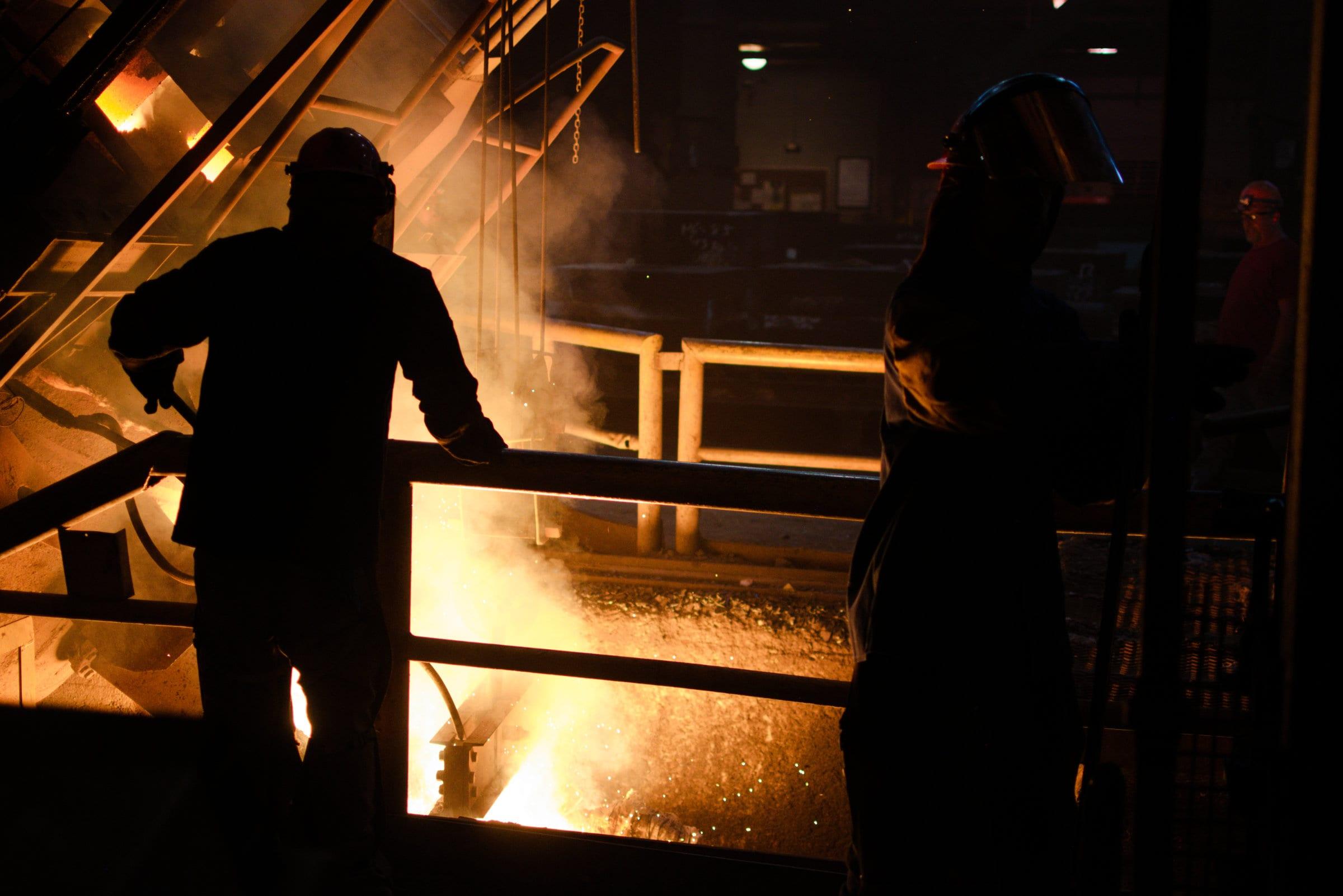
People
The metallurgy knowledge is on the floor, not in a brochure.
Pattern makers, melters, heat treat operators, welders, and inspectors who have run this work for years — with an engineering group that will get on a call about a failed part and tell you plainly why it failed.
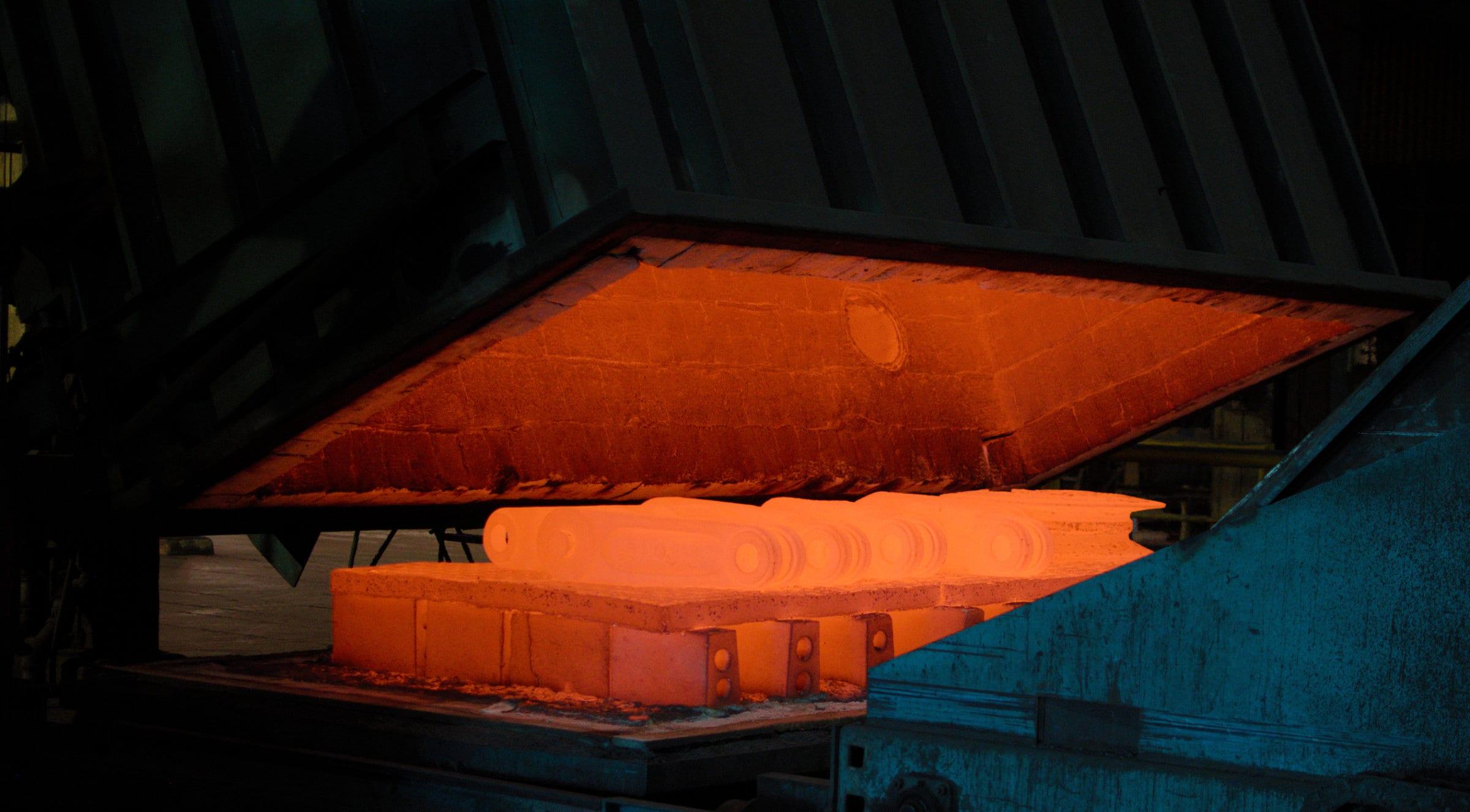
Spokane, Washington
Cast here. Heat treated here. Inspected here.
Melting, molding, finishing, heat treatment, and inspection happen on one site in Spokane. Nothing about the schedule depends on an ocean crossing.
Start the work
Send the drawing.
Send a print, a model, or a photograph of the part that keeps failing. Engineering reviews geometry, tolerances, and metallurgy, then quotes it.
- Technical review within 48 hours
- UT · MT testing in-house
- Domestic manufacturing
Route
Export-controlled work
Do not upload ITAR or EAR controlled drawings through this site. The quote form asks first and routes controlled work to our existing controlled channel.
- Phone
- 509-924-0440
- Facility
- 3808 N Sullivan Rd, Bldg #1, Spokane Valley, WA 99216