
Your drawing, poured to your specification.
Production castings for equipment builders — carbon and low-alloy steel, from a prototype pattern through repeat release.
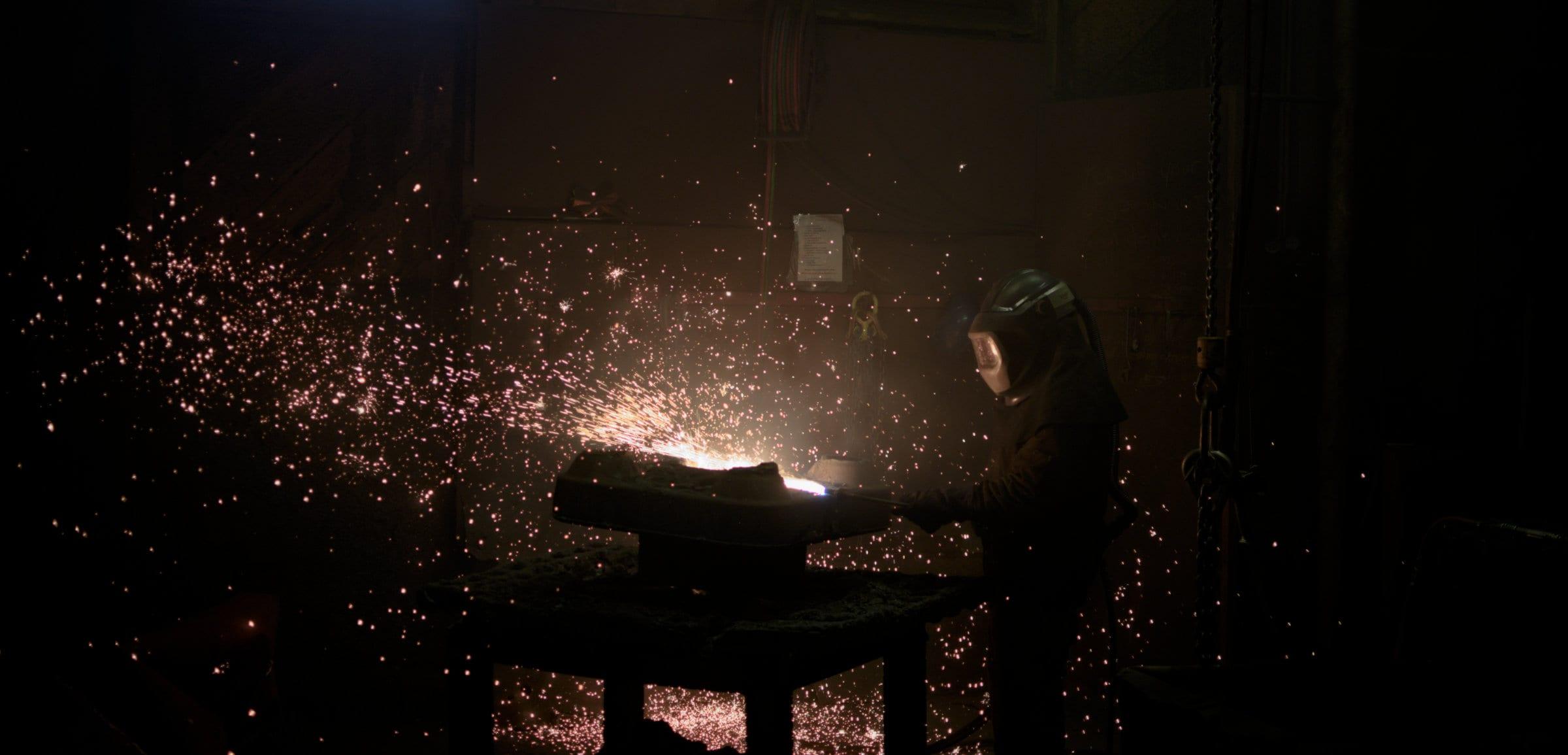
OEM steel castings
What we pour here.
This is contract casting work. You bring the drawing and the specification. We bring the pattern strategy, the pour, the heat treatment, and the records that prove what the part is. These parts are structural rather than sacrificial, so soundness and mechanical properties decide acceptance, not abrasion life.
Typical parts
- Equipment frames
- Housings
- Drive components
Materials
- Carbon steel
- Low-alloy steel
Grades and mechanical properties on the data sheets
What decides the job
Three things worth settling before the quote.
01
Internal soundness
A structural casting is judged on what is inside it. Gating and risering are laid out so the part feeds and solidifies in the right order, and non-destructive testing is matched to how the part is loaded.
02
Machining allowance
Allowance gets reviewed before the pattern is cut, because a part that arrives with too little stock is scrap and one with too much is paid for twice in the machine shop.
03
Prototype to production
Pattern strategy is sized to what you are actually doing — a handful of prototypes and a repeat production release are different decisions.
How it gets made
Poured, treated, and inspected on one site.
Chemistry is read before tap, heat treatment runs to a written recipe, and UT · MT testing is done here rather than sent out. Everything stays tied to the heat number.
Send the drawing or the specification.
Tell us what the part has to survive and engineering comes back with a material, a process, and a price.
Technical review within 48 hours