
Where a part failure stops production.
Heavy wear castings for hard-rock mining, including Si-Tec® ceramic reinforcement where a single alloy will not hold up.
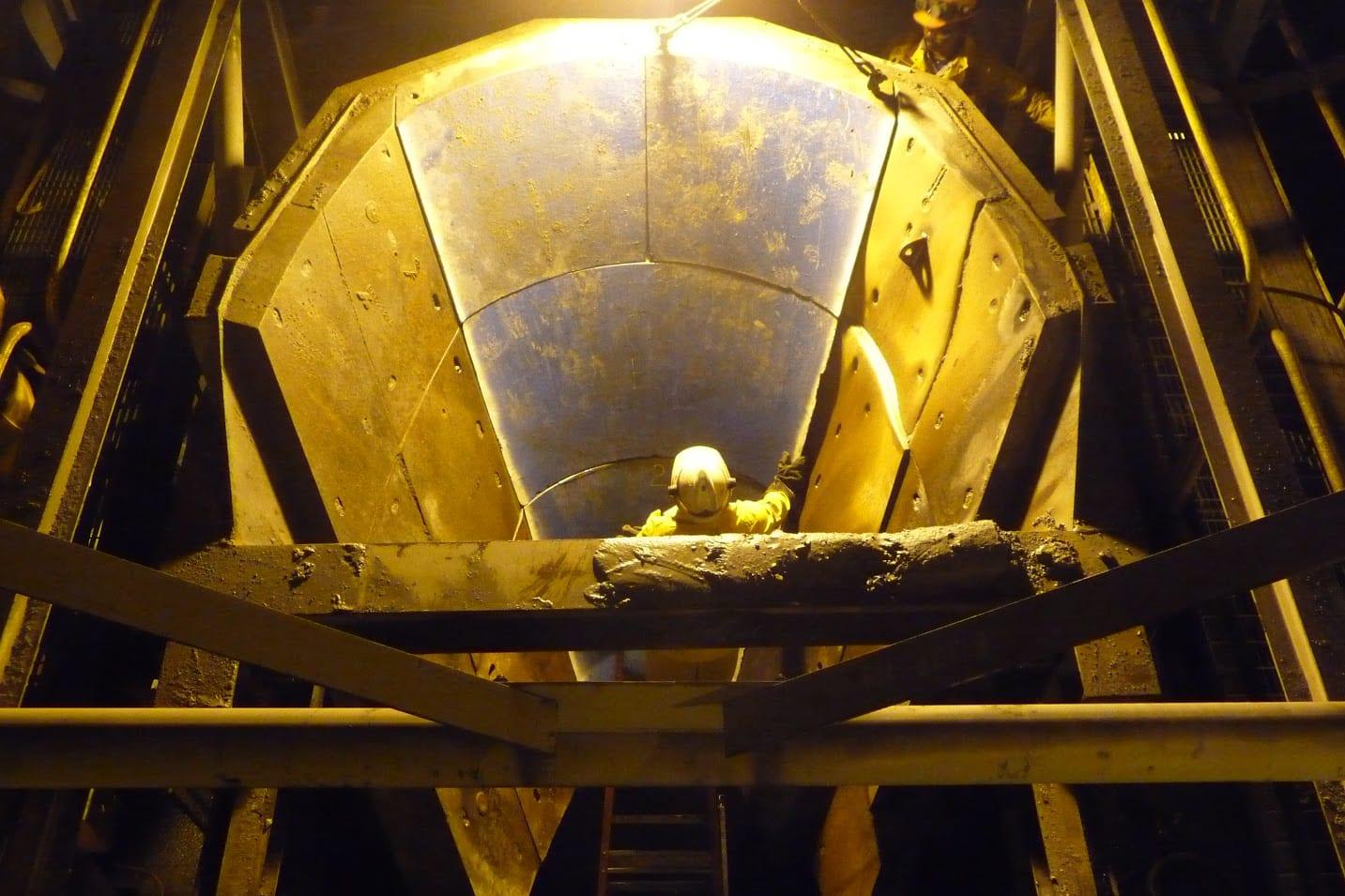
Mining wear castings
What we pour here.
Mining duty is the hardest thing we pour for. The abrasion is severe, the loads are heavy, and a failure is measured in stopped production, not in a replaced part. So the part is specified around lasting until the next scheduled shutdown, and the wear face gets whatever material system that takes.
Typical parts
- Mill liners
- Wear plate
- Gyratory concaves
Materials
- Alloy steel
- High-chrome iron
- Si-Tec®
Grades and mechanical properties on the data sheets
What decides the job
Three things worth settling before the quote.
01
Severe sliding abrasion
Where a hard monolithic alloy is still polishing away, Si-Tec® places ceramic reinforcement in the wear zone and leaves the rest of the casting tough.
02
Primary crushing duty
A gyratory concave takes heavy impact and coarse, gouging feed at the same time. Section thickness and alloy get set against the tonnage the crusher is actually pulling.
03
Service data comes back
Wear measurements from the field drive the next revision of the material or the geometry, which is how a part improves over a second and third run.
How it gets made
Poured, treated, and inspected on one site.
Chemistry is read before tap, heat treatment runs to a written recipe, and UT · MT testing is done here rather than sent out. Everything stays tied to the heat number.
Send the drawing or the specification.
Tell us what the part has to survive and engineering comes back with a material, a process, and a price.
Technical review within 48 hours